![flexible-workspace.jpg]()
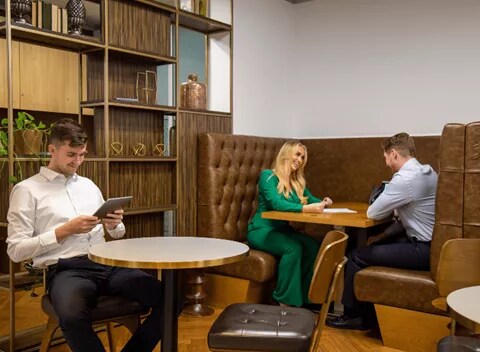
A flexible office space is a workspace designed to adapt to how a business operates, offering a mix of shared, bookable, and reconfigurable areas rather than fixed desks or long-term layouts.
It allows companies to scale space up or down and support different ways of working without committing to rigid traditional office leases.
This article covers the main types of flexible offices, the benefits they provide, and the practical considerations involved in finding the right flexible office space.
Types of flexible workspaces
Coworking Spaces
Coworking spaces have emerged as the most popular of all the flexible office solutions. They offer shared offices where individuals and teams work alongside other businesses in a flexible, membership-based environment.
They’re built for collaboration and networking, offering communal areas, shared spaces, and networking opportunities that suit freelancers, startups, and small teams who want flexibility without the cost or commitment of a private office.
Serviced Office
Serviced offices are fully furnished, ready-to-use private office space offered on flexible terms through a flexible contract rather than a fixed lease. Rent typically includes utilities, internet, cleaning, reception services, and access to shared facilities like meeting rooms and breakout spaces.
They’re a popular choice for established businesses that want privacy and professionalism, without managing an office themselves or locking into a long lease.
Hot Desks
Hot desking is another popular type of flexible workspace, where employees do not have their own assigned desks and instead choose from shared desk layouts, often for a few hours or a single workday.
This encourages more interaction between colleagues and can lead to a more flexible and collaborative environment.
Hybrid / hub-and-spoke offices
Hybrid or hub-and-spoke offices combine a central headquarters with smaller satellite offices or local hubs closer to where employees live. Staff split time between home, local hubs, and the main office as needed.
This model works well for remote businesses that need additional office space across multiple locations, often through smaller satellite offices rather than a single headquarters.
Flexible Office vs Traditional Office
In the UK, the difference between flexible and traditional offices largely comes down to lease commitment, upfront costs, and how much responsibility sits with the tenant. Flexible offices are designed to remove friction, while traditional leases place more control and risk on the occupier.
|
Factor
|
Flexible Office Space
|
Traditional Office
|
|
Lease length
|
Rolling monthly licences or short-term agreements (often 1–12 months)
|
Full repairing and insuring (FRI) leases, typically 5–10 years
|
|
Cost structure
|
One monthly fee covering rent, business rates, utilities, internet, cleaning, and reception services
|
Rent paid separately, plus business rates, service charge, utilities, insurance, and maintenance
|
|
Scalability
|
Space can usually be increased or reduced with minimal notice
|
Headcount changes often require lease re-negotiation, subletting, or relocation
|
|
Setup time
|
Fully furnished and operational within days
|
Fit-out, furniture, cabling, and compliance can take several months
|
For UK businesses facing uncertain growth, hybrid working patterns, or short-term projects, flexible offices reduce upfront capital spend and exposure to long-term lease risk. Traditional offices tend to suit organisations with stable occupancy, dedicated fit-out requirements, and a long-term presence in a specific location.
Why should a business use flexible workspaces?
Since Covid, flexible working arrangements have become commonplace, with flexible workspaces enabling businesses to operate efficiently while supporting employee well being.
There are many benefits of flexible office spaces, including:
- Increased productivity: employees have the freedom to work in a variety of settings which suits their needs. This improves on morale which leads to employees being more productive and taking less unnecessary sick days.
- Cost savings: businesses can save on costs by not having to lease a traditional office space. This is often the most pivotal factor when a business is deciding between the desired workspace.
- Scalability: businesses can easily scale up or down their workspace requirements as needed. As a result, it also reduces the risk factor of having to commit to a lease which is often the biggest difficulty for small business.
- Access to talent: businesses can tap into a global pool of talent by using coworking spaces. This factor may also tie into cost if the talent's location has a weaker currency.
Although there are many benefits, it's best to compare the pros and cons of a coworking space versus a private office before selecting one for your business.
Are Flexible Workspaces still trending?
Flexible workspaces are not only trending but they are here to stay. With the rise of the gig economy and more businesses looking for ways to be agile, it's no surprise that flexible workspaces are becoming more popular.
UK Flexible Office Market: Key Statistics and Trends
- Market value: The UK flexible office market is valued at approximately US $3.8–4.0 billion (2024–25) and is forecast to reach roughly US $6.5 billion by 2031, growing at around 9% compound annual growth rate.
- Total flexible office stock: UK flexible office supply exceeds 5 million sq ft, following 30%+ year-on-year growth in managed and serviced office space
- Number of locations: The UK has over 4,000 coworking and flexible workspace locations, with over 1,200 in London alone.
- Occupancy rates: Average UK flexible office occupancy sits at around 80%, indicating sustained demand despite wider office market softness
- Business adoption: Demand for flexible office space in the UK is more than three times higher than pre-pandemic levels, driven by hybrid working and shorter lease preferences
- Corporate use: Flexible offices are expected to account for nearly 30% of corporate real-estate portfolios by the late 2020s, up from just over 20% today.
- London market share: Flexible offices currently represent around 12% of London office stock, with projections suggesting this could almost double by 2030
Essential aspects of flexible workspaces
When looking for a flexible workspace, there are a few key aspects that you should keep in mind, such as:
- Location: it's important to find a space that is easily accessible for your employees whilst also elevating your company’s professional image.
- Type of space: as discussed, there are a variety of flexible workspace options available, so it's important to find one that best suits the needs of your business. If your company only needs the space one or two times a week, then a shared office space may be right for you.
- Layout: this should be conducive to the type of work that will be done there. The best flexible spaces typically feature an open plan layout, with open plan designs that include adaptable workstations, standing desks, quiet zones, and collaborative space, alongside break out areas and event spaces.
- Amenities: the space should have all the amenities that your employees need in order to be productive. Popular flex office space amenities include private phone booths, focus zones, coffee bars and klitxhen facilities.
- Price: this should be within your budget but also should consider the value being received. Settling for a cheap solution which offers minimal value will only take your business a step back.
What to Expect From a Flexible Office Provider
Servcorp is one example of how flexible office providers package workspace, services, and infrastructure into a single, ready-to-use offering.
Its coworking and serviced office locations focus on businesses that want flexibility without sacrificing professional standards or operational support.
Across its global network, Servcorp provides access to enterprise-grade technology, secure high speed internet connections, professionally managed meeting rooms, and on-site IT support.
Businesses also benefit from reception and call-handling services, shared facilities such as printing and scanning, and optional dedicated desks for teams that want consistency within a flexible environment.
Like many flexible office providers, Servcorp removes the need for long leases, upfront fit-outs, and separate supplier contracts, making it a practical option for companies that value speed, predictability, and the ability to scale space as needs change.
Frequently Asked Questions